


Calvin Klein
Escape Perfume
Escape Perfume
Couldn't load pickup availability
Fall, Summer, Spring, and Winter
Casual, Everyday, and Special occasion
Female
View full detailsPairs well with
More from Best Selling Colognes & Perfumes Fragrances

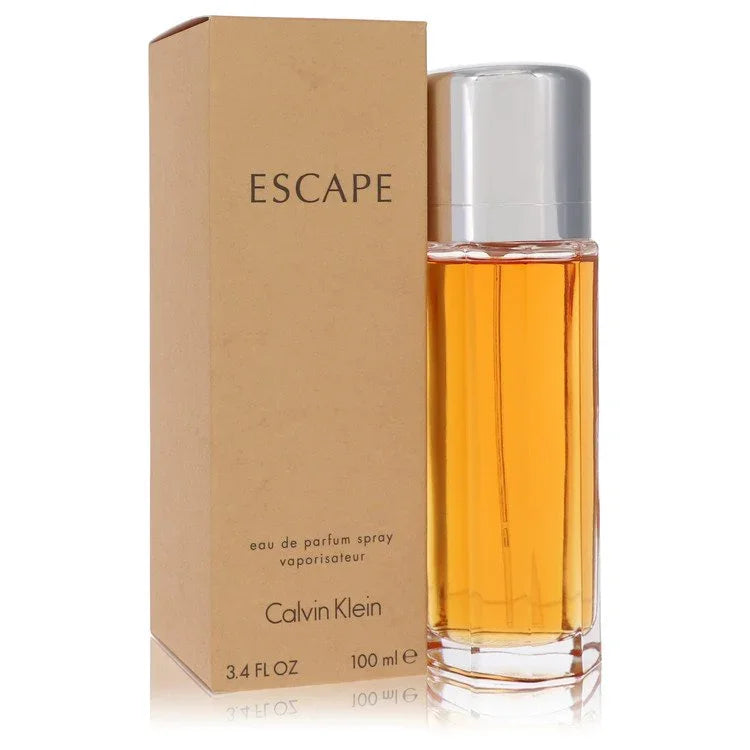
Escape Perfume – Fragrance Details & Scent Profile
Escape Perfume by Calvin Klein, launched in 1991, embodies the brand's ethos of freedom and adventure, designed for the romantic, free-spirited woman. Its distinct blend of aquatic, floral, and fruity notes transports wearers to a serene beachside retreat, making it a staple across generations. The fragrance opens with invigorating top notes of chamomile, apple, and lychee, offering a fruity zest. This leads into the heart of the perfume, where romantic floral notes of rose, lily of the valley, and jasmine linger, capturing the essence of femininity. Finally, the scent fades into warm base notes of sandalwood, vanilla, and musk, providing a comforting yet alluring finish. Escape Perfume’s timeless charm makes it a versatile choice for any occasion, embodying both self-assurance and elegance, whether worn during the day or night, regardless of the season.
More Fragrance Questions
What is sillage and how does Escape Perfume project?
Sillage refers to the trail a fragrance leaves in the air as you move — sometimes called projection or throw. Fragrances with bold base notes like oud, amber, musk, and woods tend to project strongly. Lighter, citrus-forward or aquatic fragrances sit closer to the skin. For maximum projection, apply Escape Perfume to pulse points and allow it to dry naturally without rubbing.
Why does Escape Perfume smell different on me than in the bottle?
Fragrances interact with your skin chemistry, body temperature, and pH level, which is why the same scent can smell different from person to person. Factors like skin hydration, diet, and even medication can influence how a fragrance develops. Applying to moisturised skin helps the scent bloom more fully and last longer.
How should I apply Escape Perfume for best results?
Spray Escape Perfume onto pulse points — wrists, neck, behind the ears, inner elbows, and chest — where body heat will amplify the scent. Hold the bottle 10–15 cm from your skin and avoid rubbing the fragrance in, as this breaks down the top notes and reduces longevity. Applying over an unscented moisturiser helps the scent last even longer.
What is the difference between designer and niche fragrances?
Designer fragrances are produced by major fashion brands — such as Dior, Chanel, and YSL — and formulated to appeal to a broad audience at an accessible price. Niche fragrances are created by independent perfume houses with a focus on artistic expression, rare ingredients, and unique scent profiles, produced in smaller quantities at a premium price.
What makes Arabian and Middle Eastern fragrances unique?
Arabian fragrances — from houses like Lattafa, Rasasi, Afnan, and Swiss Arabian — are rooted in centuries-old perfumery traditions using ingredients like oud, rose, saffron, amber, and musk. They are often oil-based or highly concentrated, giving them exceptional longevity and sillage, while offering remarkable value compared to Western niche fragrances.